At a Glance
Chronic Pain: Key Facts
What it is:
pain that lasts, or keeps coming back, for more than three months.
Common sources:
the spine and discs, joints and arthritis, irritated or damaged nerves, muscles, old injuries and surgery.
How it is diagnosed:
a detailed assessment, a physical exam, your imaging and, when needed, image-guided diagnostic injections to confirm where the pain comes from.
How it is treated:
mostly without surgery — medication, nerve blocks, trigger point and spinal injections, radiofrequency ablation and regenerative options such as PRP and ozone.
Where:
Dr. Hazem Kafrouni’s clinic, Nassif Rayes Street, facing Saint George Hospital, Achrafieh, Beirut. Call or WhatsApp +961 70 131 370.
About Chronic Pain
What Is Chronic Pain?
Chronic pain is pain that lasts or keeps returning for longer than three months — longer than the normal time the body needs to heal. This is the definition used by the International Association for the Study of Pain (IASP).
Acute pain is a warning sign of injury and fades as you heal. Chronic pain is different: the original problem may still be active, such as a worn joint or an irritated nerve, or the nervous system may keep sending pain signals even after the tissue has healed. That is why chronic pain needs a proper diagnosis rather than painkillers alone.
Acute vs Chronic Pain
Acute pain | Chronic pain | |
|---|---|---|
How long | Days to weeks | More than 3 months |
Cause | A recent injury, illness or surgery | An ongoing problem (joint, disc, nerve) or an oversensitive nervous system |
What it does | Warns you to protect the injury | Continues beyond healing and affects daily life |
Treatment goal | Heal the injury | Find the pain source and reduce pain and restore function |
Causes
What Causes Chronic Pain?
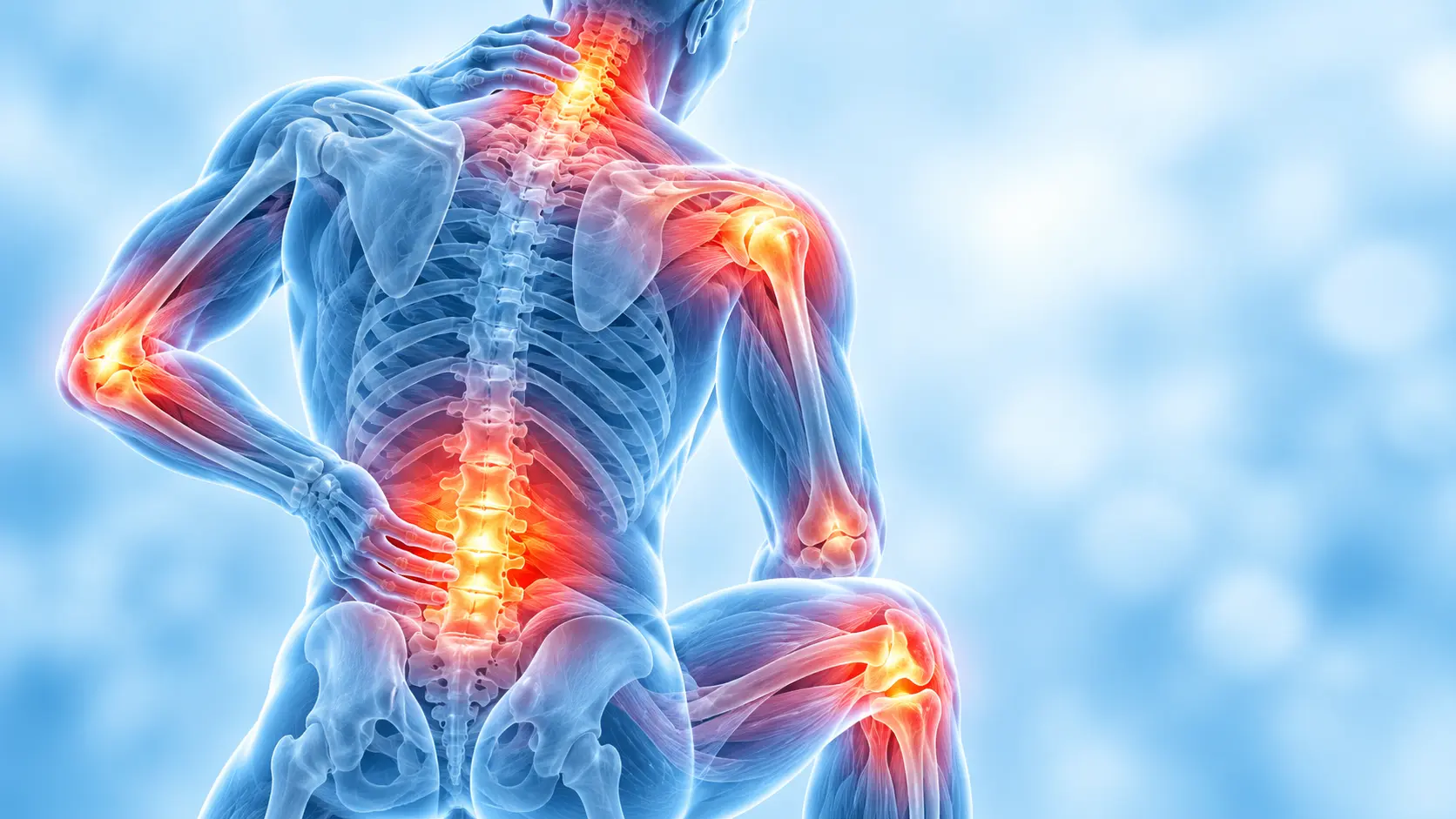
Chronic pain usually comes from a problem in the spine, joints, nerves or muscles that has not fully settled — and sometimes from the nervous system itself becoming oversensitive. Common causes include:
Wear and tear of the spine and joints (degenerative disc disease, facet joint arthritis, osteoarthritis)
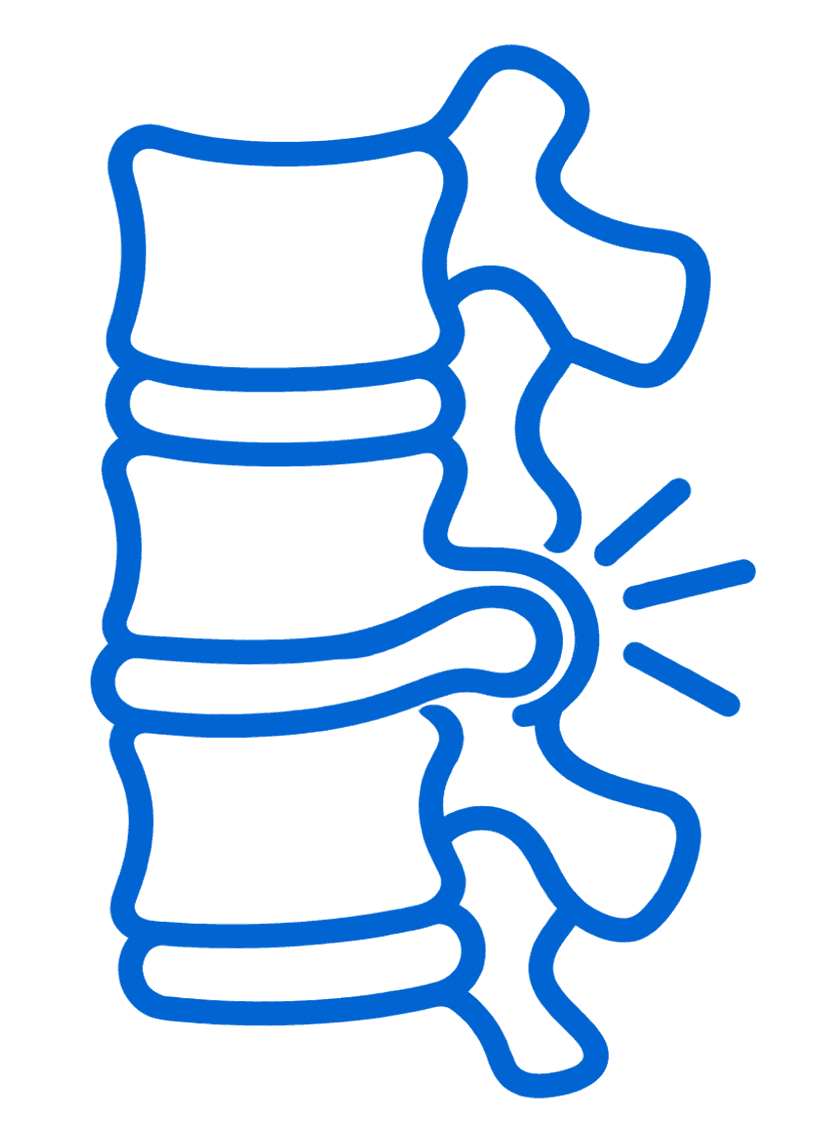
Herniated or bulging discs pressing on a nerve
Nerve damage or irritation (sciatica, diabetic neuropathy, trigeminal neuralgia)
Old injuries, sports injuries or pain that continues after surgery
Muscle and soft-tissue pain (myofascial pain, fibromyalgia)
Central sensitization — when the nervous system stays "switched on" and amplifies pain signals
Risk factors: age, previous injury, long hours sitting or poor posture, physically demanding work, excess weight, poor sleep and ongoing stress.
Conditions
Types of Chronic Pain Dr. Hazem Treats in Beirut
Chronic Back and Spine Pain
Long-term lower back pain from discs, facet joints or the sacroiliac joint — one of the most common reasons patients visit. Treatment targets the exact structure causing the pain.
Chronic Neck Pain
Persistent neck pain from the cervical discs, joints or muscles, often with headaches or pain spreading to the shoulder and arm.
Joint Pain and Arthritis
Ongoing knee, shoulder and hip pain from osteoarthritis or old injuries, treated with image-guided joint injections and regenerative options.
Nerve (Neuropathic) Pain and Sciatica
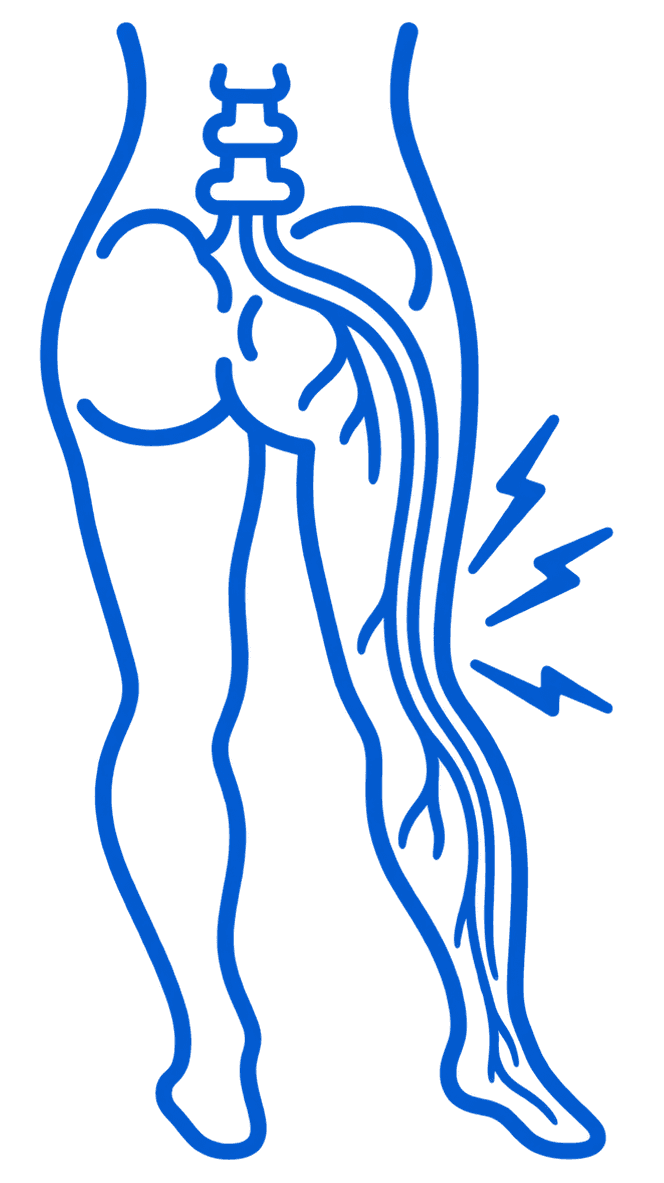
Burning, tingling, shooting or electric-like pain caused by an irritated or damaged nerve — including sciatica, where pain travels from the lower back down the leg. Nerve pain often responds poorly to regular painkillers and needs targeted treatment.
Trigeminal Neuralgia (Facial Nerve Pain)
Sudden, severe, electric-shock-like pain in the face caused by irritation of the trigeminal nerve. When medication is not enough, nerve blocks or radiofrequency treatment of the nerve can reduce attacks.
Fibromyalgia and Muscle (Myofascial) Pain
Widespread muscle pain, tenderness, fatigue and poor sleep. Management combines medication, trigger point injections for painful muscle knots and a structured activity plan.
Headaches and Migraine
Chronic headaches and migraine, including headaches that start in the neck. Options include nerve blocks and Botox injections for chronic migraine.
Pain After Injury or Surgery
Pain that continues months after an injury or operation, often due to scar tissue or nerve irritation.
When to Seek Care
When Should You See a Chronic Pain Specialist?
See a pain specialist if your pain has lasted more than a few weeks and is not improving, or if any of the following apply:
Pain has lasted three months or longer, or keeps coming back
It limits your work, sleep, exercise or daily activities
Painkillers, rest or physiotherapy have not given lasting relief
You feel burning, tingling, numbness or pain spreading down an arm or leg
You want to explore non-surgical options before considering surgery
Seek urgent care immediately if back pain comes with loss of bladder or bowel control, numbness around the groin, sudden leg weakness, fever, or follows a serious fall or accident.
Diagnosis
How Dr. Hazem Diagnoses Chronic Pain
Effective treatment depends on finding the exact source of the pain. Dr. Hazem Kafrouni follows a step-by-step assessment:
01
Detailed history
where the pain is, how long it has lasted, what makes it better or worse, and previous treatments.
02
Physical and neurological exam
movement, strength, reflexes and sensation.
03
Imaging review
your MRI, X-ray or CT scans — or new imaging if needed.
04
Image-guided diagnostic injections
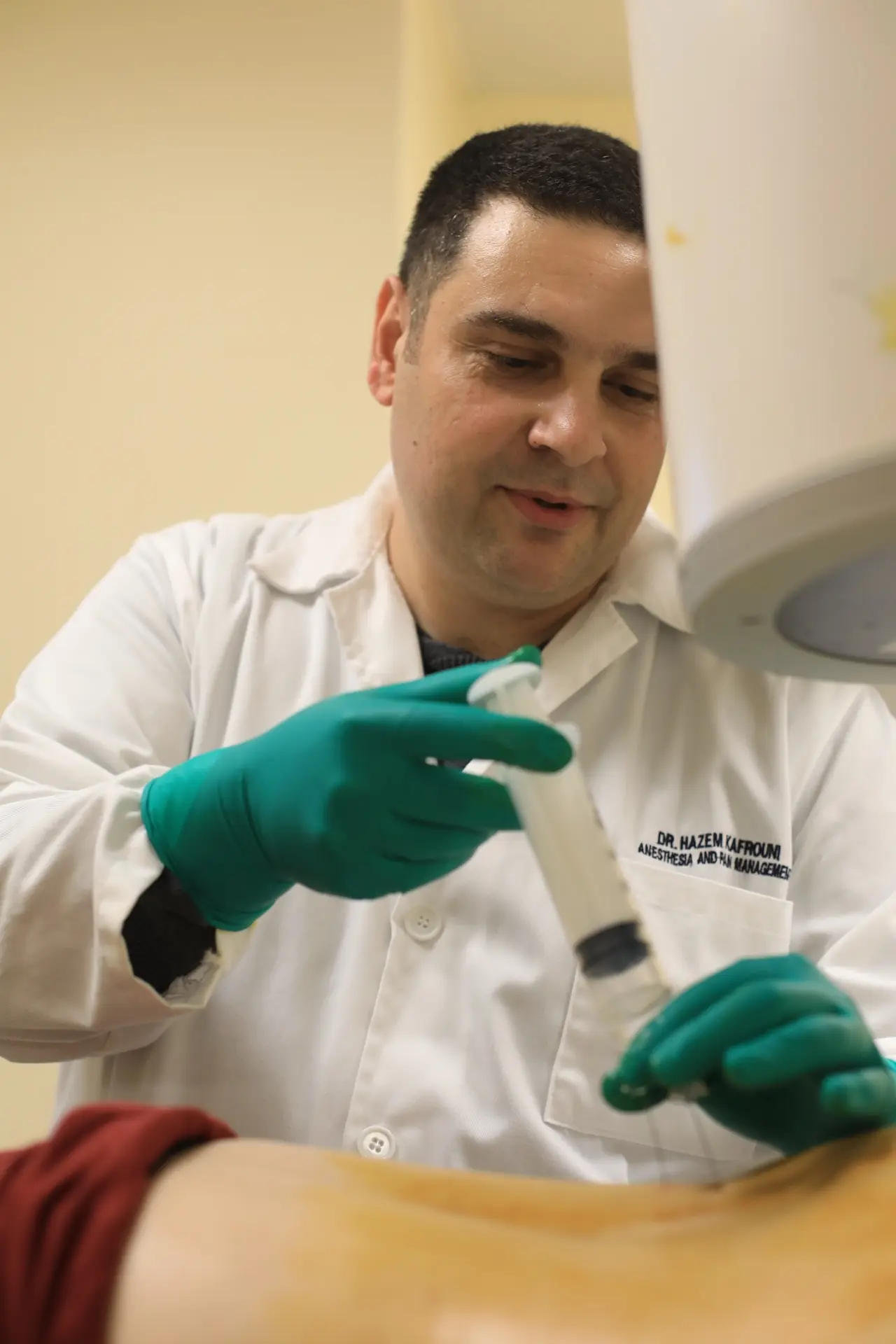
when the source is unclear, a small, precise injection under ultrasound or fluoroscopy can confirm which nerve or joint is causing the pain.
05
A personalized plan
the least invasive treatment likely to help, explained clearly before you decide.
Treatments
Non-Surgical Chronic Pain Treatments in Beirut
Most chronic pain can be managed without surgery. Treatment is chosen according to the source of your pain and often combines more than one approach.
Medication Management
A tailored medication plan — including medicines designed for nerve pain — reviewed regularly to balance relief and side effects.
Nerve Blocks
An injection of local anesthetic, sometimes with an anti-inflammatory, around a specific nerve to calm pain signals. Nerve blocks also help confirm the source of pain.
Trigger Point Injections
Injections into tight, painful muscle knots that relax the muscle and relieve myofascial and fibromyalgia-related pain.
Joint and Spinal Injections
Image-guided epidural, facet joint, sacroiliac and joint injections that deliver medication exactly where the pain starts.
Radiofrequency Ablation (RFA)
Uses heat generated by radio waves to interrupt the nerve fibers carrying pain signals. It is used for facet joint (back and neck), sacroiliac, knee and peripheral nerve pain, and relief often lasts many months.
Regenerative Medicine
PRP therapy with the Arthrex ACP system, ozone therapy and selected stem cell treatments aim to support the body’s own healing in joints, tendons and discs. Suitability depends on your diagnosis, and results vary between patients.
Chronic Pain Treatments Compared
Treatment | Often used for | How it works |
|---|---|---|
Nerve block | Nerve pain, headaches, diagnosis | Numbs and calms the nerve |
Trigger point injection | Muscle knots, fibromyalgia | Relaxes the painful muscle |
Spinal / joint injection | Back, neck and joint pain | Reduces inflammation at the source |
Radiofrequency ablation | Facet, SI joint, knee, facial nerve pain | Interrupts pain signals with heat |
PRP / ozone | Joint, tendon and disc pain | Supports the body’s healing |
Recovery times are typical ranges and vary between patients; Dr. Hazem confirms what to expect for your procedure.
Why Choose Us
Why Patients Choose Dr. Hazem Kafrouni for Chronic Pain
Board-certified in pain management, with more than 15 years of experience
Image-guided precision with ultrasound and fluoroscopy
University diplomas in pain management and regional analgesia from France, and specialized training in ozone therapy
Regenerative options including PRP with the premium Arthrex ACP system
Practices at his private clinic and at Saint George Hospital University Medical Center, Achrafieh
A non-surgical-first approach built around an accurate diagnosis
Self-Care
Living With Chronic Pain: What Helps Alongside Treatment
Medical treatment works best when combined with healthy daily habits:
Stay gently active — regular walking and guided exercise keep joints and muscles from stiffening
Protect your sleep — poor sleep makes pain feel worse
Watch your posture, especially during long hours at a desk or on the phone
Manage stress, which can amplify pain signals
Follow your plan and attend follow-ups so treatment can be adjusted
General advice only — always discuss changes with your doctor.
Chronic Pain FAQ
Chronic Pain: Frequently Asked Questions
What is considered chronic pain?
Can chronic pain be cured?
What kind of doctor treats chronic pain?
What is the best treatment for chronic pain?
Can chronic pain be treated without surgery?
How long does radiofrequency ablation last?
Are pain injections painful?
Do I need a referral or an MRI before booking?
Where can I get chronic pain treatment in Beirut?
How do I book an appointment?




Get Help for Chronic Pain in Beirut
You don’t have to keep living with long-term pain. Book a consultation with Dr. Hazem Kafrouni to find the source of your pain and a treatment plan that fits you. Call or WhatsApp +961 70 131 370 — Achrafieh, Beirut.
This page provides general information and does not replace a medical consultation. Treatment suitability and results vary between patients.
