At a Glance
Sciatica: Key Facts
What it is:
pain along the sciatic nerve, from the lower back or buttock down the back of the leg, caused by an irritated or compressed nerve root.
Most common cause:
a herniated (slipped) disc in the lower back. Others include spinal stenosis, worn discs and piriformis syndrome.
Outlook:
many cases improve within a few weeks; pain that lasts longer or is severe needs targeted treatment.
Treatment without surgery:
medication, physiotherapy, fluoroscopy-guided epidural injections, piriformis injections and pulsed radiofrequency.
Where:
Dr. Hazem Kafrouni’s clinic, Nassif Rayes Street, facing Saint George Hospital, Achrafieh, Beirut. Call or WhatsApp +961 70 131 370.
About Sciatica
What Is Sciatica?
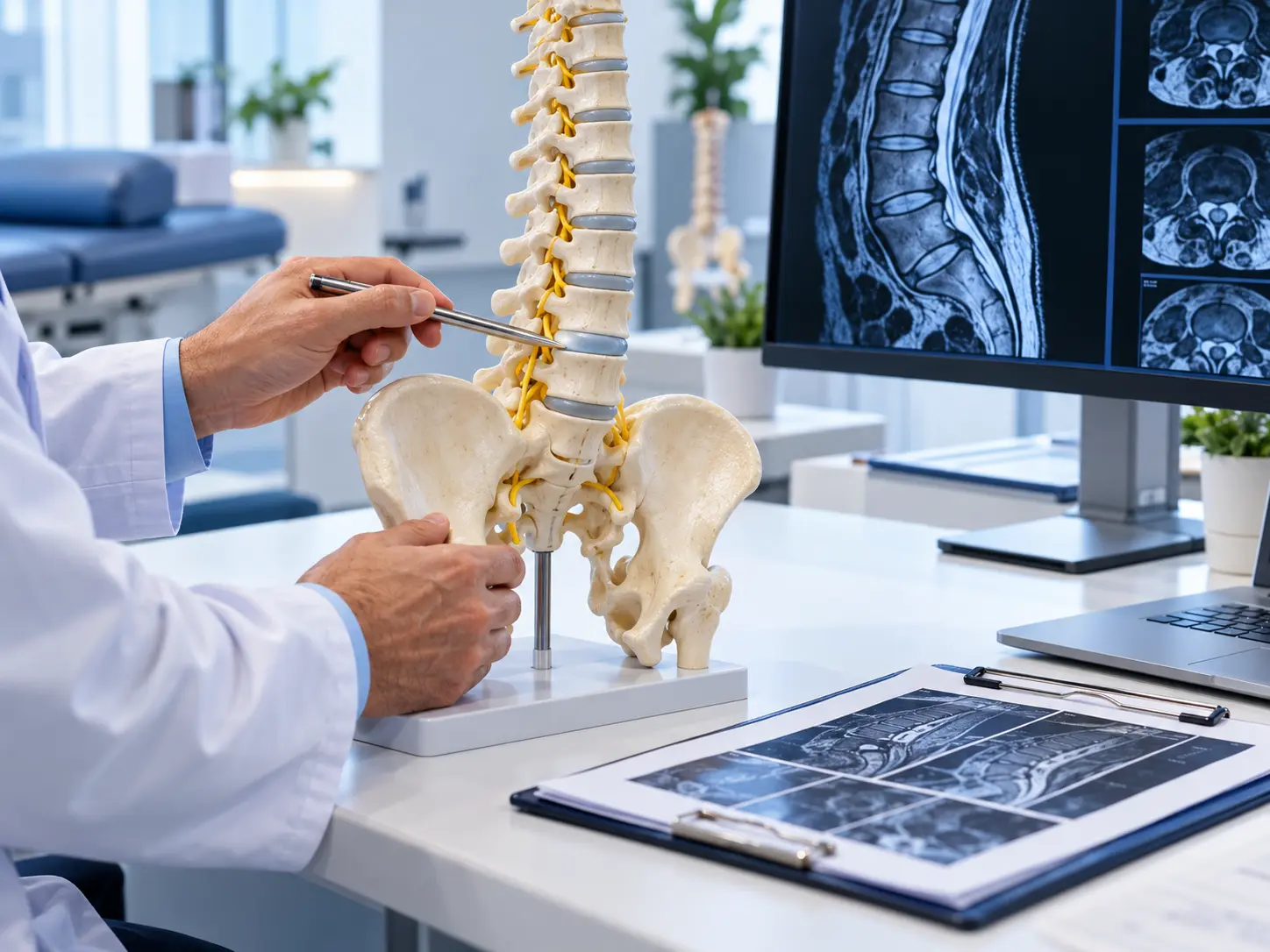
Sciatica is nerve pain that travels along the sciatic nerve — from the lower back or buttock down the back of the thigh and often into the calf or foot. It happens when one of the nerve roots that form the sciatic nerve is irritated or compressed, usually by a disc in the lower spine.
Sciatica is a symptom, not a diagnosis on its own. Finding what is irritating the nerve — a disc, narrowing of the spine or a tight muscle — is what makes treatment work.
Symptoms
Sciatica Symptoms
Pain that travels from the lower back or buttock down the back of the leg
Burning, shooting or electric-shock-like leg pain
Tingling, pins and needles or numbness in the leg or foot
Leg pain that is often worse than the back pain
Pain that worsens with sitting, coughing, sneezing or bending
Weakness in the leg or foot in some cases
Causes
What Causes Sciatica?
Herniated or Bulging Disc
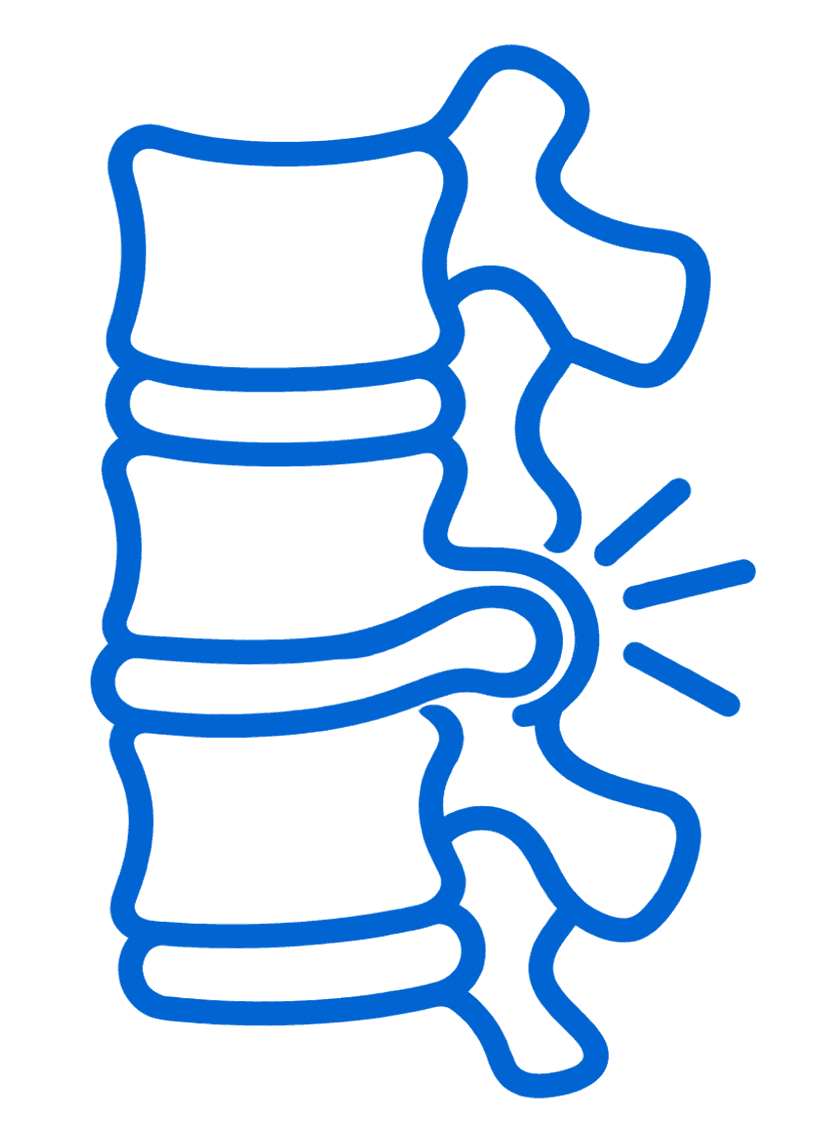
The most common cause. Part of a lower-back disc pushes out and presses on a nerve root, causing inflammation and leg pain.
Spinal Stenosis
Narrowing of the spinal canal, usually with age, squeezes the nerves. Pain often gets worse with walking and eases when sitting or bending forward.
Degenerative Disc Disease
Wear of the discs over time can irritate the nearby nerve roots.
Spondylolisthesis
A vertebra slips slightly forward over the one below, narrowing the space for the nerve.
Piriformis Syndrome
The piriformis muscle deep in the buttock tightens or spasms and irritates the sciatic nerve, causing buttock and leg pain that looks like sciatica even though the spine is not the cause.
Know the Difference
Sciatica vs Piriformis Syndrome: What’s the Difference?
Both cause pain down the back of the leg, but the source is different — and so is the treatment. Sciatica from the spine starts at a nerve root in the lower back; piriformis syndrome starts in a muscle in the buttock.
Sciatica from the spine | Piriformis syndrome | |
|---|---|---|
Source | A nerve root in the lower spine (disc, stenosis) | The piriformis muscle in the buttock |
Where it starts | Lower back, spreading to the leg | Deep in the buttock, spreading to the leg |
Back pain | Often present | Usually little or none |
Worse with | Bending, coughing, sneezing, sitting | Sitting long, climbing stairs, crossing legs |
Targeted treatment | Epidural injection | Ultrasound-guided piriformis injection |
Scroll horizontally to compare.
General guide only — an examination and imaging confirm which one you have.
Outlook
Will Sciatica Go Away on Its Own?
Many people with sciatica improve within a few weeks with activity, simple pain relief and gentle exercise. If the pain lasts longer than four to six weeks, keeps returning, or is too severe to sleep or work, targeted treatment can calm the irritated nerve and speed recovery.
When to Seek Care
When Should You See a Doctor for Sciatica?
Leg pain lasting more than four to six weeks, or coming back often
Pain severe enough to affect sleep, work or walking
Numbness or tingling that is spreading or not improving
Painkillers and physiotherapy have not helped
You have been advised to have surgery and want to explore other options first
Go to the emergency department immediately if you have loss of bladder or bowel control, numbness around the groin or inner thighs, sudden weakness in both legs, or sciatica with fever. These can be signs of serious nerve compression (cauda equina syndrome) that needs urgent care.
Diagnosis
How Dr. Hazem Diagnoses Sciatica
01
History
where the pain travels, what triggers it and how long it has lasted.
02
Neurological exam
strength, reflexes, sensation and nerve stretch tests.
03
MRI review
to see which disc or nerve root is involved, or new imaging if needed.
04
Personalized plan
the least invasive treatment likely to work, explained clearly.
Treatments
Non-Surgical Sciatica Treatments in Beirut
Most people with sciatica do not need surgery. Dr. Hazem uses image guidance so each injection reaches the irritated nerve precisely.
Medication
Anti-inflammatories and medicines designed for nerve pain to ease symptoms while the nerve settles.
Epidural Steroid Injections
An anti-inflammatory injected under fluoroscopy (live X-ray) into the space around the irritated nerve root. It reduces nerve inflammation and is one of the most effective non-surgical treatments for disc-related sciatica.
Pulsed Radiofrequency
Gentle radiofrequency pulses applied near the nerve to calm persistent nerve pain without damaging the nerve. Used when pain continues despite injections.
Intradiscal Ozone Therapy
For selected disc herniations, medical ozone injected into the disc can help shrink the herniated material and reduce pressure on the nerve.
Piriformis Injection
For piriformis syndrome, an ultrasound-guided injection relaxes the tight muscle and relieves pressure on the sciatic nerve.
Physiotherapy and Exercise
A guided exercise plan strengthens the core, improves flexibility and helps prevent sciatica from coming back.
Sciatica Treatments Compared
Treatment | Best for | How it works |
|---|---|---|
Epidural steroid injection | Disc-related sciatica | Calms nerve inflammation |
Pulsed radiofrequency | Long-lasting nerve pain | Calms nerve signalling |
Intradiscal ozone | Selected disc herniations | Reduces disc pressure on the nerve |
Piriformis injection | Piriformis syndrome | Relaxes the muscle |
Recovery times are typical and vary between patients.
Before Surgery
Do You Need Surgery for Sciatica?
Most people with sciatica recover without surgery. Surgery is usually considered only when there is progressive leg weakness, signs of serious nerve compression, or severe pain that does not improve after several months of non-surgical treatment. Dr. Hazem will tell you honestly if surgery is the better option and refer you when it is.
Why Choose Us
Why Patients Choose Dr. Hazem Kafrouni for Sciatica
Board-certified in pain management
with more than 15 years of experience
Fluoroscopy- and ultrasound-guided injections for precision
Specialized training in oxygen-ozone therapy, including intradiscal ozone
A full range of non-surgical options for both spinal sciatica and piriformis syndrome
Private clinic facing Saint George Hospital, Achrafieh, and practice at Saint George Hospital University Medical Center
Self-Care
Gentle Exercises That Can Help Sciatica
Gentle movement usually helps sciatica more than bed rest. These simple exercises are commonly recommended — stop if any of them makes the leg pain worse:
Knee-to-chest stretch
lie on your back and gently pull one knee towards your chest for 20–30 seconds, then switch sides.
Piriformis stretch
lie on your back, cross the affected leg over the other knee and gently pull the lower knee towards you.
Pelvic tilts
lie on your back with knees bent and gently flatten your lower back into the floor, then relax.
Nerve glides
seated, slowly straighten the knee while lifting the toes towards you, then relax — a gentle movement, not a stretch.
Short walks
regular, short walks keep the back moving and help the nerve settle.
General advice only — ask Dr. Hazem or your physiotherapist which exercises suit your condition.
Sciatica FAQ
Sciatica: Frequently Asked Questions
What is sciatica?
What are the main symptoms of sciatica?
How long does sciatica last?
What is the best treatment for sciatica?
Can sciatica be treated without surgery?
Do epidural steroid injections work for sciatica?
What is the difference between sciatica and piriformis syndrome?
Is walking good for sciatica?
When is sciatica an emergency?
Where can I get sciatica treatment in Beirut?



Get Relief From Sciatica in Beirut
Don’t let leg pain keep you from sitting, sleeping or walking comfortably. Book a consultation with Dr. Hazem Kafrouni to find what is irritating the nerve and the right non-surgical treatment. Call or WhatsApp +961 70 131 370 — Achrafieh, Beirut.
This page provides general information and does not replace a medical consultation. Treatment suitability and results vary between patients.
