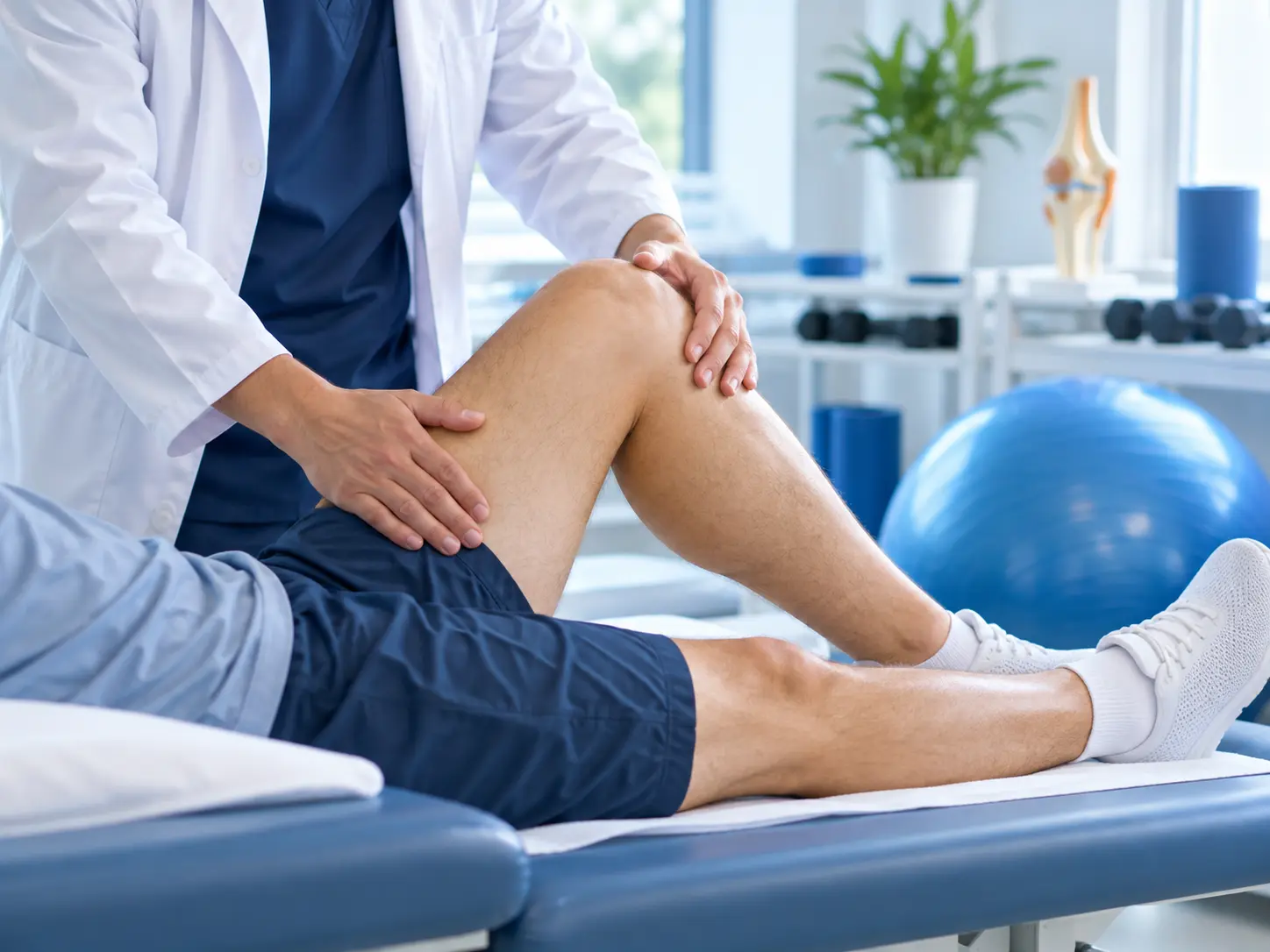
At a Glance
Knee Pain: Key Facts
Most common cause:
knee osteoarthritis (wear of the joint cartilage), especially after age 50. In younger and active people, tendon problems and sports injuries are more common.
Other causes:
patellar tendonitis, meniscus and cartilage damage, bursitis and old ligament injuries.
Diagnosis:
a knee examination, in-clinic ultrasound and a review of your X-ray or MRI.
Treatment without surgery:
image-guided corticosteroid, hyaluronic acid, PRP (Arthrex ACP) and ozone injections, genicular nerve radiofrequency, and a strengthening plan.
Where:
Dr. Hazem Kafrouni’s clinic, Nassif Rayes Street, facing Saint George Hospital, Achrafieh, Beirut. Call or WhatsApp +961 70 131 370.
About Knee Pain
What Causes Knee Pain?
Knee pain is pain in or around the knee joint. It is most often caused by wear of the joint cartilage (osteoarthritis), irritation of the tendons or the fluid-filled sacs around the knee, or damage to the meniscus or ligaments from an injury.
The knee carries your body weight with every step, so even mild problems can make walking, climbing stairs, kneeling or exercising painful. Pain may build up slowly over months or start suddenly after a twist or fall — and the right treatment depends on which structure is causing it.
Causes
Common Causes of Knee Pain
Knee Osteoarthritis
The most common cause of knee pain in adults. The protective cartilage gradually wears down, causing pain with walking or stairs, morning stiffness, swelling and a grinding feeling. It usually develops after 50 but can start earlier after an injury.
Patellar Tendonitis (Jumper’s Knee)
Irritation of the tendon that connects the kneecap to the shin bone, causing pain just below the kneecap. It is common in people who run, jump or play football and basketball, and gets worse with squatting and stairs.
Meniscus and Cartilage Damage
The meniscus is the shock-absorbing cartilage inside the knee. A twisting injury or gradual wear can damage it, causing pain on the inner or outer side of the knee, swelling, and a catching or locking feeling.
Knee Bursitis
Swelling of the small fluid-filled sacs (bursae) that cushion the knee, often from frequent kneeling or a knock to the knee. It causes a tender, swollen area at the front or inner side of the knee.
Ligament and Old Sports Injuries
Injuries to the ACL, MCL or other ligaments can leave the knee unstable and painful for years, and increase the risk of early arthritis.
Joint Inflammation
Inflammatory conditions and flare-ups can make the knee hot, swollen and painful. Dr. Hazem coordinates with your other doctors when an inflammatory condition is involved.
Symptoms
Where Does Your Knee Hurt? What It May Mean
The location and type of pain can point to the likely cause. This is a general guide only — a proper examination is needed to confirm the diagnosis.
Where / how it hurts | Possible cause |
|---|---|
Inside of the knee, worse with walking | Osteoarthritis or a meniscus problem |
Just below the kneecap, worse with jumping or stairs | Patellar tendonitis |
Around or behind the kneecap, worse when sitting long or squatting | Patellofemoral (kneecap) pain |
Stiff whole knee in the morning, grinding sound | Osteoarthritis |
Swollen, tender lump at the front of the knee | Bursitis |
Catching, locking or giving way | Meniscus tear or ligament injury |
When to Seek Care
When Should You See a Doctor for Knee Pain?
Knee pain has lasted more than a few weeks or keeps coming back
It limits walking, stairs, sport or sleep
The knee is swollen, stiff or grinding
Painkillers, rest or physiotherapy have not helped enough
You have been told you may need a knee replacement and want to explore non-surgical options first
Seek urgent care if you cannot put weight on the leg, the knee is locked and will not straighten, it looks deformed after an injury, or it is red, hot and swollen with a fever.
Diagnosis
How Dr. Hazem Diagnoses Knee Pain
01
History
when the pain started, what triggers it, your activity level and previous treatments.
02
Knee examination
movement, swelling, stability and the exact points of tenderness.
03
In-clinic ultrasound
to look at tendons, fluid and soft tissues in real time.
04
Imaging review
your X-ray or MRI to assess cartilage, meniscus and ligaments.
05
Personalized plan
the least invasive treatment likely to work for your knee, explained clearly.
Treatments
Non-Surgical Knee Pain Treatments in Beirut
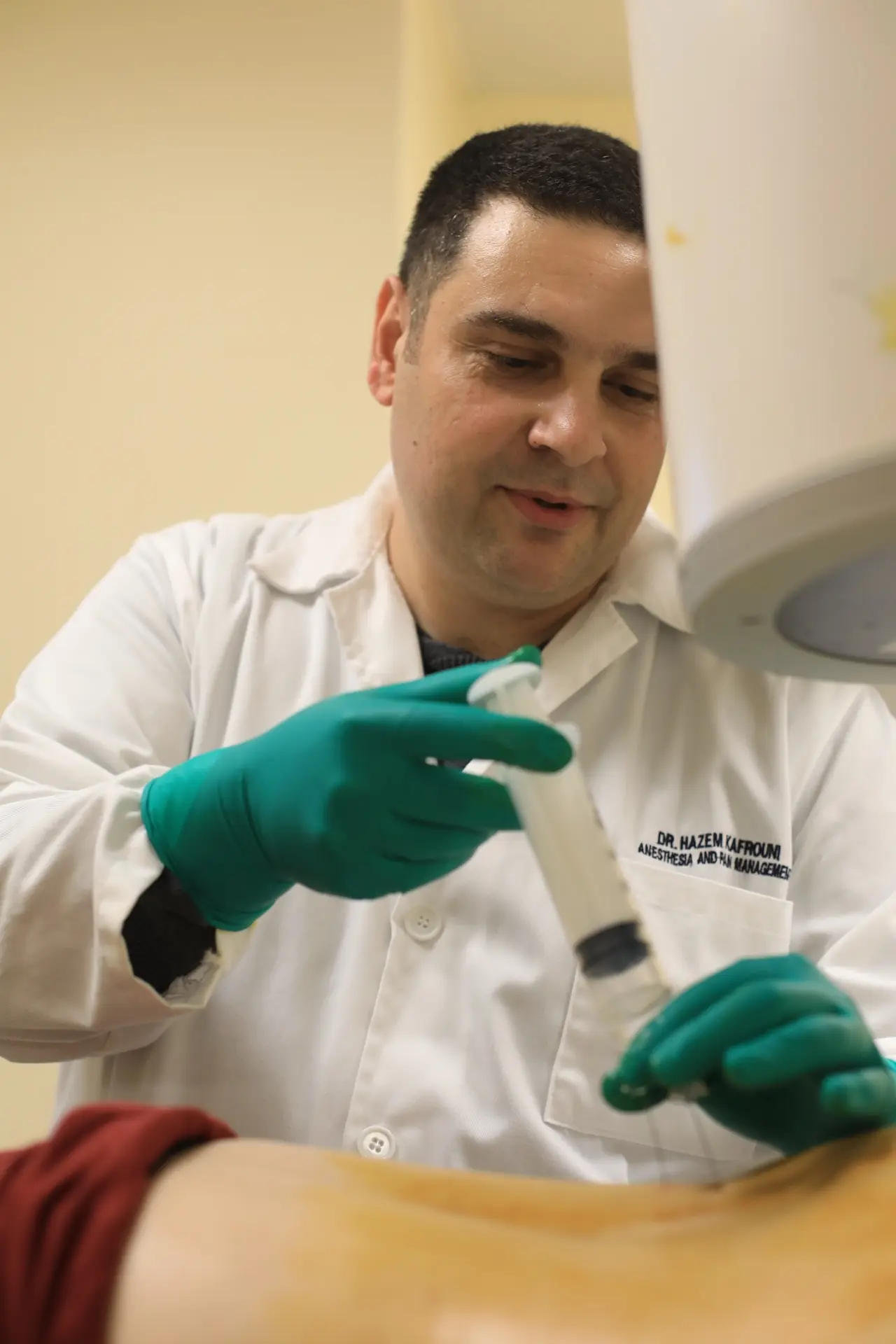
Most knee pain can be treated without surgery. Dr. Hazem performs knee injections under ultrasound guidance so the treatment reaches exactly the right spot.
Corticosteroid Injections
A strong anti-inflammatory injected into the knee to calm a painful flare quickly. Useful for short-term relief; the number of injections per year is limited.
Hyaluronic Acid Injections
Hyaluronic acid injections (viscosupplementation) add lubrication and cushioning to a knee with osteoarthritis. They are most helpful for mild to moderate arthritis, and relief often lasts several months.
PRP Therapy (Arthrex ACP)
Platelet-rich plasma is prepared from a small sample of your own blood using the premium Arthrex ACP system and injected into the knee. It can reduce pain and improve function in mild to moderate knee arthritis and tendon problems such as patellar tendonitis. Relief builds over several weeks.
Ozone Therapy
Medical ozone injected into the joint can help reduce inflammation and pain in selected knee conditions. Dr. Hazem advises whether it suits your diagnosis.
Regenerative and Stem Cell Treatments
Selected regenerative treatments aim to support the knee’s own healing. Evidence is still developing: they are not proven to regrow cartilage and results vary, so suitability is assessed honestly case by case.
Genicular Nerve Block and Radiofrequency Ablation
For moderate to severe knee arthritis, the small genicular nerves that carry pain from the knee can be blocked, then treated with radiofrequency heat. This can give months of relief for patients who are not ready for, or not suitable for, knee replacement.
Exercise and Strengthening Plan
Strengthening the thigh and hip muscles takes pressure off the knee and makes every other treatment work better. Dr. Hazem coordinates with physiotherapy where needed.
Knee Treatments Compared
Treatment | Best for | How it works |
|---|---|---|
Corticosteroid | Painful flare, inflammation | Calms inflammation fast |
Hyaluronic acid | Mild–moderate arthritis | Lubricates and cushions the joint |
PRP (Arthrex ACP) | Arthritis, tendonitis | Supports the body’s healing |
Ozone | Selected joint inflammation | Reduces inflammation |
Genicular RFA | Moderate–severe arthritis | Interrupts knee pain nerves |
Relief periods are typical ranges and vary between patients.
Before Surgery
Can You Avoid Knee Replacement Surgery?
For many people with knee arthritis, non-surgical treatment can reduce pain enough to delay or avoid knee replacement — especially in the early to moderate stages. Injections, regenerative options, genicular nerve radiofrequency and a strengthening plan are often tried first. When the joint is severely damaged, knee replacement may still be the best long-term option. Dr. Hazem will tell you honestly which stage your knee is at and, if surgery is the right choice, can help manage pain before and after it.
Why Choose Us
Why Patients Choose Dr. Hazem Kafrouni for Knee Pain
Board-certified in pain management, with more than 15 years of experience
Ultrasound-guided knee injections for accuracy and comfort
Premium PRP with the Arthrex ACP system
The full range of options in one place: corticosteroid, hyaluronic acid, PRP, ozone and genicular nerve radiofrequency
An honest, non-surgical-first approach — and a clear answer when surgery is the better choice
Private clinic facing Saint George Hospital, Achrafieh, and practice at Saint George Hospital University Medical Center
Self-Care
How to Protect Your Knees Between Treatments
Keep a healthy weight — every extra kilo adds load on the knee with each step
Strengthen the thigh and hip muscles that support the knee
Choose low-impact exercise such as swimming, cycling and walking
Warm up before sport and build up training gradually
Wear supportive shoes and avoid long periods of kneeling
General advice only — follow the plan agreed with your doctor.
Knee Pain FAQ
Knee Pain: Frequently Asked Questions
What is the most common cause of knee pain?
Can knee pain be treated without surgery?
Which injection is best for knee pain?
How long do hyaluronic acid injections last?
Is PRP effective for knee arthritis?
Can PRP or stem cells regrow knee cartilage?
Can I avoid knee replacement?
What is patellar tendonitis?
When should I see a doctor for knee pain?
Where can I get knee pain treatment in Beirut?


Get Your Knee Pain Assessed in Beirut
Don’t let knee pain limit how you walk, work or exercise. Book a consultation with Dr. Hazem Kafrouni to find the cause and the right non-surgical treatment. Call or WhatsApp +961 70 131 370 — Achrafieh, Beirut.
This page provides general information and does not replace a medical consultation. Treatment suitability and results vary between patients.
